Interview: Robert Zhao Renhui
When did you begin venturing into the realm of photography/visual art?
When I was 9 years old, I used my dad’s Yashica to take some photographs in school. I used a fine tip marker pen to draw some ghostly shapes on the negatives and brought the developed photographs back to the classroom. My classmates were really spooked by the photographs and a few weeks later the ‘ghost’ in the classroom was exorcised by a medium. I learnt how to create these pictures from a book that was explaining how ghost photographs are made. I could not further my studies when I was 16 because my grades were really horrible. The only school that accepted me was because my photography portfolio was not too bad. From that point onwards I paid more attention to photography.
How did you conceive A Guide to the Flora and Fauna of the World?
I was looking for the scientific name of the Goldfish in an encyclopaedia and found out that the goldfish has none. It is also excluded out of the encyclopaedia. The goldfish is not a natural animal. It was created by man a long time ago. So long ago we are not sure how it came about. It didn’t occur to me that a common fish like the goldfish is an unnatural animal. So I wanted to find out if there were more of these animals that was not as natural as we think they might be. I wanted to see if there was a space where we can look at these animals. This was how the project started.
Can you briefly talk about your process, particularly in regards to A Guide of Flora and Fauna of the World?
I have always collected stories about nature since I started photography. A lot of photographs in the project were created a long time ago from places I visited and objects I’ve came across. Its all in my notebook. When I had the chance to bring everything together for the Singapore Biennale in 2013, I took the chance to reorganise my notebook and shortlisted about 100 animals and plants to be photographed for the project. I had about 200 photographs at the end but only used 55 of them. The grouping and selection was purely an aesthetic one. I grouped together a selection of images which I felt represented the current relationship we have with nature.
Was it a conscious choice to photograph flora and fauna? How did this decision – the theme of the book – come about?
There was a lot of research, papers and news articles that informed the way the images were created. The narrative of the situation is as important as the images themselves. A lot of time, there is nothing happening in the image, it is what it is. I think what I am trying to do when I create the images is to make us look at our surroundings and environment a bit harder. To try to slow down on our consumption and ideas of nature. To try to think about the control we have over nature in our everyday. A broccoli wasn’t always a broccoli.
How much research and time went into this project?
In my work I’ve always looked at nature. So this project is mainly a reorganising and formalising of my research. A lot of photographs in this book are from projects that I am doing. Like a heartwarming feeling where I document the migrations of birds affected by global warming or Moondust, where I collect hundreds of different insects trapped and incinerated in street lamps.
Is there a particular image that resonates with you and what you are trying to convey in the book?
The goldfish. I don’t work with live animals for my work, they are unpredictable and its too stressful for me and the animal. I usually work with freshly dead fishes from the aquariums. For me the goldfish summarises the experience of the book very well. We are no longer quite sure what is natural and what is not. I am not saying that it is wrong or right to exert control over nature but controlling nature has always been a very human thing to do.
Can you explain to me the significance of the goldfish?
A lot of people are surprised that the goldfish is an unnatural animal. It is just not the way we think about goldfishes. I think we all grow up knowing that the goldfish lives in a bowl and we don’t think of anything much beyond that. The goldfish is as natural as our pet dog or cat. All have been bred to serve our needs. We are not really sure how the goldfish came about, the records are murky and we can only speculate the true origins of the goldfish. Maybe it was a well kept secret back in the days when the first goldfish came about. This is very much the same with most new breeds of aquarium fish in Asia where origins of the hybrids are commercial secrets.
What were some challenges in making this book?
I took a large financial risk to make this book. I am used to smaller books and designing the books on my own but nothing on this scale and volume. The project is an accumulation of a few years of research and projects and I wanted to see how working with a book designer would push the project further. I worked with H55 studio and had a really good experience. I think what was really important was that the designer had a real curiosity in nature and what my project was trying to talk about. The book is not bounded by made of loose sheets in a box, similar to a collection of objects or works found in older volumes of natural history drawings. There is also a progression of colour to black and white in the book. Also, the paper gets thinner, like a newspaper. The images at the back are mainly situations and scenarios that has happened, are in the midst of happening or are proposals of what can happen. In the book, they all look as if they have already happened.
There seems to be a fictional element to your book – can you explain this?
Some of the situations in the book are based on hypothesis and scientific papers, so the photographs were constructed around these papers. Everything I talk about seems so impossible but its all happened, in one way or another.
What are you currently working on?
I am currently working on a project about trees and the natural history of Singapore. I’m looking at the relationship Singapore has with trees since the 1890s. Singapore has taken a huge amount of effort in greening the island with plants and trees. The effect that this has on the landscape and our interactions with nature is rather interesting. We have become so accustomed to what it is like that we don’t really see the trees anymore.
Do you have any advice for young artists, particularly for those interested in making photo books?
I am attracted to work by artists who have become really obsessive and passionate about a subject. I think this obsessiveness brings about a really fresh perspective and it begins to show in the work and in the book as well.
This article was published on the 5 January 2015, on the Photobook Melbourne blog.
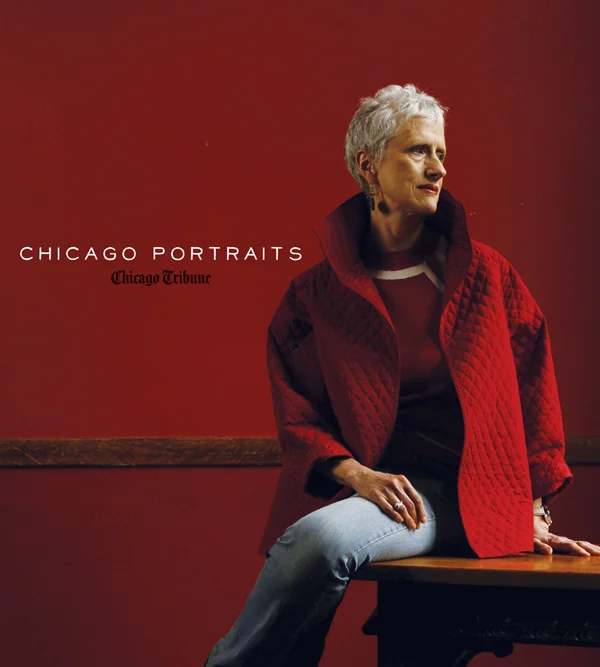
Book Review: Chicago Portraits
Behind the thick dark frames of his glasses, Woody Allen’s eyes are wide and pensive. Lips are pursed. Only one side of his face is visible and it is completely absent of expression. It is a moment rarely seen and scarcely captured.
Occasionally there are images that are so vivid they haunt you. One glance can send a slight shiver across the skin and cause an irrepressible dilation of the pupils, almost synonymous with a cataclysmic event, such as death.
Alex Garcia’s portrait of Woody Allen at the Drake Hotel in 2000, featured in Chicago Portraits, is one such image. It depicts a moment so rare and profound, that it reveals a mortality and vulnerability previously unseen. Consequently, an immediate intimacy is created between the viewer and the subject, and these ties percolate into the relentless progression of time.
Chicago Portraits, by the Chicago Tribune Staff, captures the power of portraiture photography, whilst showcasing the Chicago Tribune’s vast historical archive.
Staff photographers, such as Bill Hogan, Val Mazzenga, Heather Stone, Chris Walker, Carolyn Van Houten, Ernie Cox and Walter Kale, layer the inside of the two hundred and eighty-eight page picture book. Original article excerpts accompany the black and white, and color images, illuminating the myriad of personalities that shaped the third most populous city in the United States.
The history of Chicago is equally as rich as the history of the Chicago Tribune. Founded in 1847 by James Kelly, John E. Wheeler and Joseph K. C. Forrest, the Tribune is a daily newspaper largely circulated through the Chicago metropolitan area and the Great Lakes region.
After bordering on bankruptcy in 1855, the newspaper flourished under the editorship of Joseph Medill. In 1874, the Tribune began to invest more editorial space for illustrations, and by the early 1900’s photography had been introduced.
Portraits of iconic film stars, Charlie Chaplin, Louis Brooks, Clara Bow, Rudolph Valentino and Anna May Wong sprinkle the pages of Chicago Portraits, immortalizing the rebellious flapper era. There is an austerity present in these images, possibly heightened by the stark black and white tones. Contrastingly, colourfully candid images of the “wild west” culture, such as the portrait of William Veeck Sr., president of the Chicago Cubs from 1919 to 1933, depict a prevalent and striking cultural schism.
The chronicle of Chicago, and greater America, unfolds throughout Chicago Portraits - activist, Reverend Jesse Jackson, speaks at the funeral of Black Panther party leader Fred Hampton; Chicago’s first female mayor, Jane Byrne, holds the Tribune announcing her victory at the 1979 Democratic Primary; and Weather Underground member, Bill Ayers, previously known for his involvement in anti-Vietnam war protests, becomes a focal point in a debate between Barack Obama and Hillary Rodham Clinton.
Picture editors Robin Daughtridge, Kathrine Manker, Marianne Mather, Erin Mystkowski and Michael Zajakowski have meticulously pieced together fragments of time, incorporating both contemporary and classical photography mediums. Mr. Zajakowski writes, “Our region is a wonderfully diverse cultural, societal and political ecosystem, and the evidence is seen on the faces in this book”.
Some of the faces are weathered by degradation and loss; others are animated, optimistic and zealous. Era’s collide and lapse in the Tribune’s Chicago Portraits, subsequently creating a surreal and poetic memoir of the tattered fabrics of society.
In the foreword of Chicago Portraits, Rick Kogan reflects on the enduring nature of these images. “Wandering through the following photos,” Kogan writes, “ as if through some timeless gallery, I realize there is beauty in some, mystery in others, and truth and art in them all”.
This article was published on October 14, 2014 in Musée Magazine,
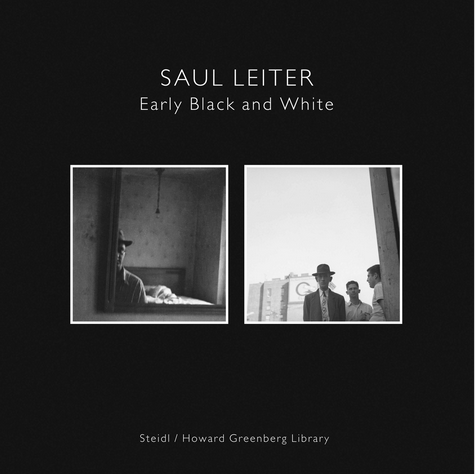
Book Review: Saul Leiter Early Black & White
A nude woman is sprawled along the wrinkled sheets, her elongated torso tilts towards the ceiling and angled limbs knot together in an unabashed display of ecstasy. Her head faces Saul Leiter, who is positioned behind darkened objects, however her arms conceal her facial expressions – it is only her full lips, slightly ajar, which can be seen. The smooth curve of her breast soaks into the softness and fragility of the photograph, ultimately heightening the sensuality.
This sensuality is prevalent throughout Saul Leiter: Early Black and White, a two-volume monograph published by Steidl/ Howard Greenberg Library. In both volumes, fractured frames juxtapose obscurely surreal and innately candid images; some of which highlight Leiter’s incredibly unique sense of humour; others ripple and dissolve into the emotive they were taken in.
Saul Leiter was a watcher shinning in the dark. He heard the echoes of footsteps dancing behind the glass, the sighs of women bracing the cold and the haunting silence of ordinary illusions – and he tirelessly followed them. The result of this pursuit is evident in Saul Leiter: Early Black and White. “Leiter is a rare artist,” Jane Livingston, chief curator for the Corcoran Gallery of Art, once said, “one whose vision is so encompassing, so refined… that his best photographs seem literally to transcend the medium.”
Born in 1923, in Pittsburgh, Pennsylvania, Leiter was the son of a prominent Rabbi. Instead of following in his father’s footsteps, at age 23, he moved to New York City to pursue painting, where he had the good fortune of meeting Abstract Expressionist painter Richard Pousette-Dart and photojournalist W. Eugene Smith, who both encouraged Leiter to pursue photography.
His early black and white photographs were first published in Life Magazine, and then in 1953, Leiter’s work was included in the “Always the Young Strangers” exhibition, curated by Edward Steichen and held in the Museum of Modern Art. By the late 1950’s, Leiter had fully integrated into the world of color photography, and soon began working for prominent fashion magazines Esquire and Harper’s Bazaar. For the next 20 years, he continued his career as a fashion and editorial photographer.
Although it has only been in recent years that Saul Leiter has received recognition for his role as one of the pioneers of color photography, his black and white work is also widely regarded as equally significant. “He has a rapturous way with color, which stems from his love of the masters of modern art”, wrote Max Kozloff in the introduction to Saul Leiter: Early Black and White, “But his black and white production is just as indebted to the lessons he learned from those same masters.”
The first volume of Saul Leiter: Early Black and White is titled Volume I: Interior, and it focuses on Leiter’s interior world. Within these pages are intimate photographs of his family and close friends; his sister Deborah, Richard Pousette-Dart, W. Eugene Smith, as well as glimpses of renowned artists, such as Andy Warhol, Diane Arbus and Marcel Duchamp. The second volume, Volume II: Exterior, presents his street photography, which oscillates between documentary and conceptual photography.
“I like it when one is not certain of what one sees,” Saul Leiter once said, “We don’t know why the photographer has taken such a picture. If we look and look, we begin to see and are still left with the pleasure of uncertainty.”
The pleasure of uncertainty marks his black and white images. The striking contrasts, mirrored reflections, and detachment from his subjects portray the impermanence of reality, and often leaves the viewer feeling as though they have stolen snippets of other people’s lives. In the 2012 documentary “In No Great Rush”, Saul revealed, “There are the things that are out in the open, and there are the things that are hidden… and the real world has more to do with what is hidden.”
His photographs can be construed as subjective perceptions, and unveil the hidden, and to some degree, reflect his own personal need to hide himself. “I was hoping to be forgotten,” Leiter remarked, “I inspired to be unimportant… the nice thing about not attracting attention and being ignored is no one asks you why – why do you do this?”
On the 15th of December 2014, this article was published in Musée Magazine.
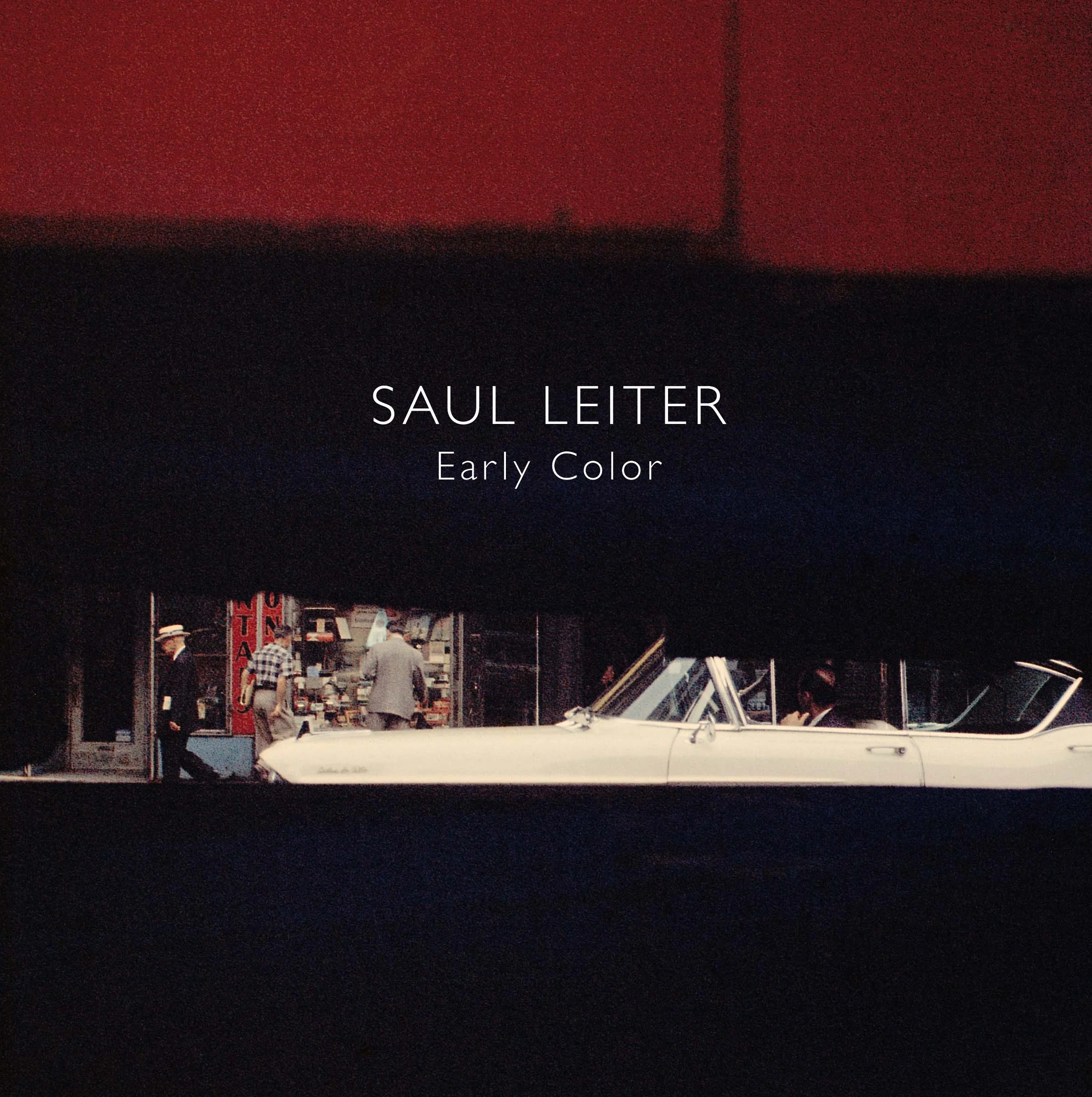
Book Review: Saul Leiter Early Color
It is quite difficult to capture a moment. Every time it settles on the impenetrable dust of time, the world has a tendency to shift ever so slightly, and that moment is rendered lost. Street photographers capture those fleeting moments, and often it takes a sharp eye to preserve the mysteries hidden in daily life.
Saul Leiter was one artist who excelled at street photography, and had redefined the medium since the 1940’s. Within the last decade, he had also became known as one of the pioneers of color photography, and in Saul Leiter: Early Color (Steidl),first released in 2008, it showcases his uncanny ability to photograph the streets of New York through a spectacular palette.
His images are honest and strikingly beautiful, but then again Leiter has always had an affinity for the beautiful, and in 1959 he stated, “I have a great regard for certain notions of beauty even though to some it is an old fashioned idea. Some photographers think that by taking pictures of human misery, they are addressing a serious problem. I do not think that misery is more profound than happiness.”
The images in Saul Leiter: Early Color, were taken between 1948 and 1960. By using expired Kodachrome film, Leiter experimented with rich hues, developing anomalies and varying techniques, of which the results are evident within this book. There is also a painterly quality to the work, and a resolute composition that sets Leiter's images apart from photographers such as William Eggleston and Stephen Shore.
“Leiter’s sensibility… place him outside the visceral confrontations with urban anxiety associated with photographers such as Robert Frank or William Klein,” wrote Martin Harrison, editor and author of Saul Leiter: Early Color, “Instead, for him the camera provided an alternate way of seeing, of framing events and interpreting reality. He sought out moments of quiet humanity in the Manhattan maelstrom, forging a unique urban pastoral from the most unlikely of circumstances.”
Leiter was a self-taught photographer and painter. When he first moved to New York at age 23, he immersed himself in artistic endeavors, and even frequented the library of the University of Pittsburgh during the summer. It was through visiting exhibitions, such as Henri Cartier-Bresson, and meeting Richard Pousette-Dart and W. Eugene Smith, that Leiter decidedly bought a 35mm Leica, and began to shoot.
In the 1950s and 1960s, Leiter became a successful fashion photographer and worked for renowned magazines like Harpar’s Bazaar and Elle. During this time, he continued to wander the streets and capture fleeting moments. He would show close friends his work, and even printed some of his black-and-white photographs, however the slides remained hidden until the 1990s.
Leiter gradually disappeared from the public eye, until 2005 when his early color photography was exhibited at the Howard Greenberg Gallery in Manhattan. Then, in the following year, the Milwaukee Art Museum hosted his first solo museum exhibition featuring his color images. In a 2008 interview for a German monograph, Leiter reflected on his indifference to success, “In order to build a career and to be successful, one has to be determined. One has to be ambitious. I much prefer to drink coffee, listen to music and to paint when I feel like it.”
There is a blanket of dissolution covering the possibility of innovative street photography, and this is sometimes illuminated by the aura of nostalgia. Looking at Early Color, saturated by browned-out tones, there is a sense of nostalgia present. However, behind this, there is something far more invaluable. If there is anything that Leiter has taught us, whether through his early color or black-and-white images, it is to observe, follow the madness that inspires us to live and create, and disregard the static noise that cripples us.
On the 15th of December 2014, this article was published in Musée Magazine.
Book Review: Kathy Ryan's Office Romance
The ability to imagine another’s reality, to abandon oneself to a stranger’s memories and associations, can require a large degree of self-discipline. However in Office Romance, published by the Aperture Foundation, the viewer intuitively experiences the moments and mutable spaces captured by Kathy Ryan within The New York Times building.
Office Romance uses unrelenting aesthetics to break the mould of the past perceptions of publishing houses as cramped, gritty and slightly chaotic. Instead, Ryan plays with modernist ethos that have become the foundations of the media revolution.
Ryan’s book is primarily comprised of still-life work and portraiture – all of which have been taken on an iPhone. This not the first time a staff member of The New York Times has produced startling images on such a mechanism. In fact, in 2010, the paper published a photograph of a soldier in Afghanistan, taken by Damon Winter using the Hipstamatic application on his iPhone, on the front page.
Today, Hipstamatic has gradually disappeared from the user’s “must-haves” application list, and this is largely due to the birth of Instagram. With over 100 million active users, this application changed the landscape of modern photography, and interestingly, it was through the use of this application that Office Romance was conceived.
“I posted that first picture on Instagram and began getting comments and likes,” Ryan wrote in theAfterword, “The effect of the “like” button cannot be overestimated. I am not a photographer, I’m a photo editor… I am not sure I would have had the nerve to make these pictures without the encouragement of the Instagram community”.
Through reassurance of this expanding community, Ryan began to take users on a journey through one of the worlds leading media companies. Office Romance blends a realistic universe with the detached, dreamlike realm of the neo-romantics. There is a complexity and richness in each photograph, with monochromatic tones melting against pages filled with intense kaleidoscopic colors.
Gaston Bachelard, author of The Poetics of Space, once wrote, “The poetic image is a sudden salience on the surface of the psyche”, and this directly corresponds to Ryan’s images. They are deeply poetic and bare the mark of an unconditional love that will last a lifetime.
These images visually correlate to Philip Glass’ arpeggios in the Opening, and other titles from his album Glassworks. There is a relaxed melody that flows through the entirety of the book, occasionally interrupted by shards of refracted shadows and spiralling energy.
This is, in part, a result of certain features implemented on The New York Times building. Designed by internationally acclaimed architect Renzo Piano, the media headquarters spans fifty-two stories high and is encased by a curtain wall to create transparency.
“Typically, what you do with a building like this, to keep the heat of the sun out, is to make it “black”… But we didn’t want to do that,” Renzo Piano wrote in the Introduction of Office Romance, “It’s too mysterious, like those people who wear sunglasses all the time – you never understand who they are, or what they think”. Thus, the brise-soleil was installed.
It is through the brise-soleil that Ryan has capture sweeping shadows creeping across the table. “What I love about Kathy’s photographs is how she captures the light, the shadows, the vibration,” Piano reflects, “The color, and the sense of transparency… She has observed details of how the light falls at different times of day, making a record of the building over time”.
It is hard to believe such a beautiful space exists adjacent to Times Square, a place exploding with condensed energy that sometimes erupts in a fantastical horror. While people frantically scuffle in all directions, yellow cabs vocally express their distaste for any living organism that touches the pavement and ineffable lights burn the retinas of squabbling tourists, there is one place that remains transparent, open and willing.
On the 11th of November 2014, this review was published in Musée Magazine.
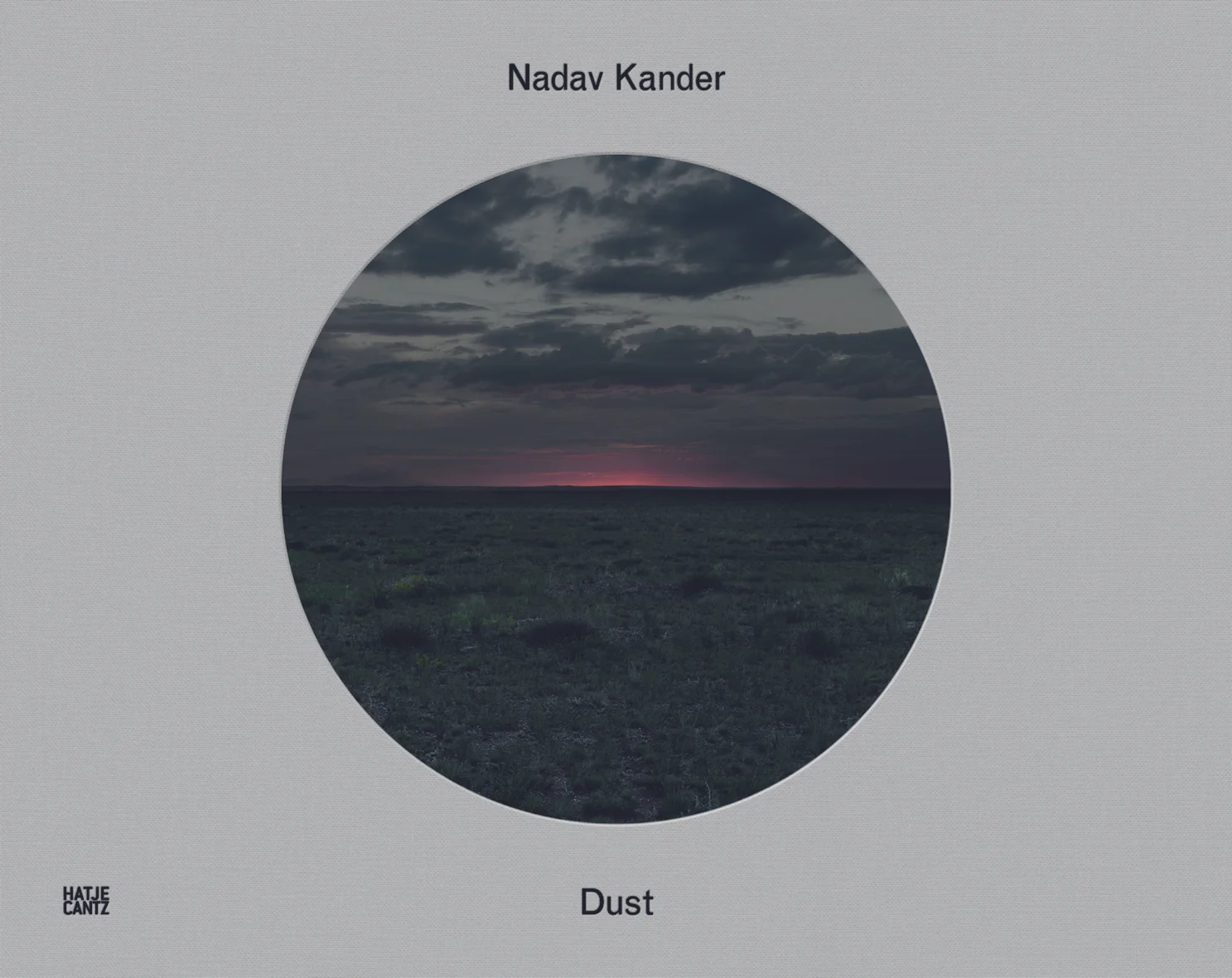
Book Review: Nadav Kander's Dust
The embers of a raging inferno, ignited by the nuclear arms race, are all that remains in the desolate region between Northwest Russia and Kazakhstan. This race became the focal point of the Cold War; by 1945 the United States had already created the first atomic bomb, and this lead to the expeditious development of the Soviet Union’s own nuclear program.
Kurchatov, also known as The Polygon, and Priozersk, formerly Moscow 10, were two sites where extensive nuclear testing was conducted, unbeknownst to the neighboring communities. A legacy of misery now scars these lands; cancer, birth defects and neurological diseases have swept through the populations, and portions of land have become uninhabitable.“The relentless quest for nuclear armaments created many of the ruins that we see here”, Nadav Kander wrote in the Artists Note of Dust, “and they now stand as monuments to the near ruin of mankind”.
Today, these areas lay intentionally forgotten, falling to ruin and sinking into the quicksands of time. Essentially, they have become invisible cities; concealed by the dominant, and often strident voice, of Russian authoritarianism.
In Kander’s latest photo book Dust, published by Hatje Cantz, he captures a landscape that has been tormented by history. Broken architectural facades, built during the height of Socialist Classicism, coalesce with deserted plains. A remarkable aspect of this book is Kander’s creation of space, which guides the viewer into a place that can only be mentally entered.
“The Aral Sea was once the fourth largest inland seas in the world. Over the past twenty years it has almost completely dried up” Kander noted, “This has left huge plains covered with salt and toxic chemicals—the results of weapons testing, industrial projects and pesticide and fertilizer runoff”.
These barren wastelands are masked by Kander’s presence; he has a unique ability to extract the silence, solitude and beauty in these haunting places. Pastel hues and rusty tones saturate the images, deceitfully concealing the desires and fear that built the foundations of these sites.
Not all images portray desolate exteriors. Kander also captures strikingly surreal interiors. Stark white walls, laced with deep blue lounges and soviet art, decorate the empty spaces. In one image, an old sign depicting three rockets firing into the air whilst the flag of the armed forces, Russian Navy and the Russian Air Force fly valiantly in the background, unveils a contrastingly different world, and one rarely seen by a global audience.
Seeing these dilapidated surroundings, a question begins to gnaw at the mind – no matter how much of this history is destroyed, will we ever manage to leave it behind?
Currently featured at the Flowers Gallery in London, Nadav Kander has established himself as one of the world’s leading landscape and portraiture photographers. Based in London, Kander is best known for Obama’s People, a portrait series published by The New York Times Magazine, and Yangtze: the Long River, which won the prestigious Prix Pictet prize in 2009. His extensive bodies of work have won countless awards, and have been included in the National Portrait Gallery, as well as the Victoria and Albert Museum in London.
Dust is scheduled for release within the US in November. For more information, download the Nadav Kander ~ Dust application.
This article was published on the 23rd of October, 2014 in Musée Magazine
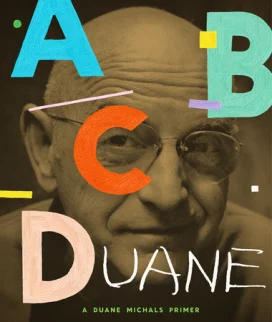
Book Review: Duane Michals' ABCDuane
In the early twentieth century, the United States fled from the despotism that had stunted its nation. World War I, followed by The Great Depression, World War II and the Cold War, saw the occurrence of a state of flux – individuals gravitated towards freedom of expression and began to examine human thought, and speculation, which illustrated the changing times.
No longer lingering in the shadows of European culture, the alchemy of America’s oscillating society began to cultivate some of the world’s most influential artists. Designers, painters, musicians, sculptors and writers started to emerge from the pockets of a disillusioned society. Duane Michals was one such artist.
Michals is known for his visual storytelling, and often displays a series of images, layered by multiple exposures and text. In his recent book, ABCDuane, published by Monacelli Press, he draws on his unique technique to weave an alphabetically categorized narrative of unseen images and works from his personal collection.
From the novelist and playwright Samuel Beckett, to sculptor Marcel Duchamp, illustrator Saul Steinberg and artist Andy Warhol, Michal embraces the distinctive qualities that make these artists extraordinary. He also captures themes, like burlesque in Pittsburgh, and philosophical ideas, such as the act of falling in love.
“Taking photographs and writing is my way of saying I was here, I saw this, I felt this, I heard this” Michals explains in the Introduction, “[It is a way of saying] It happened.”
ABCDuane exposes the condensations of Michals imagination. He mixes the metaphorical with the real, and with each photograph, he transforms himself into the essence of existence itself. These images are elliptical and the layout of the book portrays linear actions that dissolve into random events.
Riddled with painted tintypes, image sequences and text, it is Michals’ standalone portraits that highlight his remarkably attentive eye. In 1968, Michals photographed Truman Capote, languidly posed, and concealed by a heavy coat, black sunglasses and hat. Despite Capote’s intention of camouflage, his eyes peer playfully over his sunglasses, as if to say, “I recognise you, I see you, and as a result, now you see me”.
Michals was born in 1932, in McKeesport, Pennsylvania; a sleepy town burdened by the closure of the National Tube Works and G.C. Murphy. In an interview earlier this year, with Siobhan Bohnacker, Michal reflected, “I don’t know how a person could be so nutty about one place, but I’m just crazy about Pittsburgh. I consider it my spiritual home…”
In the 1940’s, this town flourished. Now, however, the population has decreased by half, and of the remaining residents, approximately 23% live below the poverty line. The decay of McKeesport is a microcosm of what happened to the greater United States, and it is this history, and its requiem, that flourishes through the pages of ABCDuane.
On the 21st of November, there will be a book signing at the International Center of Photograph for Duane Michals’ ABCDuane and Storyteller. Additionally, there is currently a retrospective of Michals’ work at the Carnegie Museum of Art in Pittsburgh, which will end February 16, 2015.
On the 21st of November 2014, this article was published in Musée Magazine
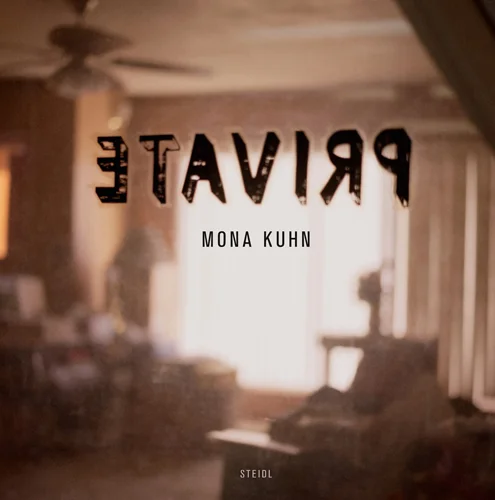
Book Review: Mona Kuhn's Private
The enigmatic Mojave Desert is the setting of Mona Kuhn’s latest photo book Private, published by Steidl. For 2 years Kuhn captured the prehistoric landscape and its obscure inhabitants, some of which are permanently present, others just ephemeral visitors. There is an illusionary aspect of Private, which holds true to the untamed desert – be wary of what you see because it will marinate in the lesions of your mind, feeding the neuroses that detach you from reality.
Shot on an analog Hasselblad, Kuhn captured pastel hues and wisps of dreamlike night visions, consequently producing images that have an eerie limbo-like quality. It is as if the reader becomes the traveller, stumbling through wrinkled golden plains, and into a hazy aesthetic oasis. As Private unfolds, the distinction between these two places becomes blurred, and ultimately merge into one undefined realm. In some regards, Kuhn’s use of film photography plays with the idea that the raw alchemic process of developing film is a form of creation, for she has ultimately created another world, a secret world.
Mona is known for her large-scale nudes and she integrates a select few into Private, and it generates a sense of intimacy. In one image, she photographs a young woman sprawled out with streams of kaleidoscopic light rippling across the curvature of her silhouette. In another, a woman extends herself across a slightly torn burgundy lounge. Her bare torso is turned away from the camera, however her face and eyes wander to the edge of the frame in a way that suggests that the viewer is interrupting her isolation.
In Private, there is an openness that inspires a terror. The lightness prevalent throughout the book draws the reader in, however the desolation evident in some images and the stark nature of others portray a deeper more precarious layer. “The desert’s seductive threat is always there of course”, David Campany wrote in Private, “It menaces from the edges. Look at the signature image of this book, a dusty room glimpsed out of focus through a glass door bearing the words “PRIVATE” in reverse. A view of sultry enigma, a chamber beyond which the brightness of the sun is coming to devour everything and take the mystery with it.”
Private is an experience in itself, and it reveals the wonder that can be found when one is quiet enough to hear the silence of others. Perhaps it is not only the silence of others that is reflected in this one hundred and four page book, but also the silence of one's self, and in turn this translates into an openness and willingness to an unconventional universe.
On the 23rd of December 2014, this article was published in Musée Magazine.
Book Review: Transition by Lauren Marsolier
A perpetual state of impermanence is apparent in the pages of Transition, and depicts the confronting bleakness of a perishable realm. Absent of life, these images oscillate between the physical and psychological world; providing the perfect breeding ground for an entanglement in lucid dreams.
For almost eight years, photographer Lauren Marsolier has captured nondescript and isolated settings. Neither here, nor there, these places are obscurely ordinary. Tidy architectural facades juxtapose illuminated social spaces, which have been offset against an abrupt black sky. These images loosely portray an openness that, surprisingly, inspires a deep sense of internal terror.
Released in August 2014, Transition, published by Kerber, chronicles Marsolier’s personal experience with transition. Resembling a carefully conceived piece of futuristic fiction, this picture book is divided into three sections; the seemingly placid, hazy beginnings of her transitional phase in 2005, a more ominous period in 2007, and lastly, a clearer, grounded time in 2009.
“The core of my work is to explore the phenomena of transition, both as a psychological process and a spatial condition”, Marsolier explains, “I am interested in how we experience change, how it can trigger inner conflicts and eventually affect our outlook”.
In the midst of a transition, the individual can experience a loss of identity, and it is this loss of identity that is adherent in Marsolier’s images. “We become enigmas to ourselves”, Stefan Mattesich wrote, “foreigners in our own lives”.
Signifiers are non-existent, subsequently eliminating the concept of the past. Additionally, the viewer can see no evidence of where they are, rendering them completely disorientated and unable to move forward or backwards. This is partly because of photomontage, where Marsolier compiles multiple photographs digitally, to create new, constructed landscapes. “These places are nowhere,” curator W.M. Hunt wrote, “They exist here as buildings somewhere at the edge of civilization”.
There is a lifeless structure to these images, and despite the knowledge that these are, in fact, environments comprised of colliding atoms, it is ultimately drowned by the noise of aimless winds. “All places come to look alike, to be interchangeable with one another”, Stefan Mattesich wrote.
Lauren Marsolier is a French photographer, based in Los Angeles, and has been the recipient of numerous awards, including the prestigious 2013 Houston Center for Photography fellowship. Her work has been included in the 2013 London Exhibition ‘Landmark: The Fields of Photography’ at the Somerset House, and she was recognised by the British Journal of Photography as one of ’20 photographers to watch in 2013’.
On November 14, Marsolier will be signing copies of Transition at the Robert Koch Gallery Stand, at Paris Photo.
This review was published on the 4th of November, 2014 in Musée Magazine.
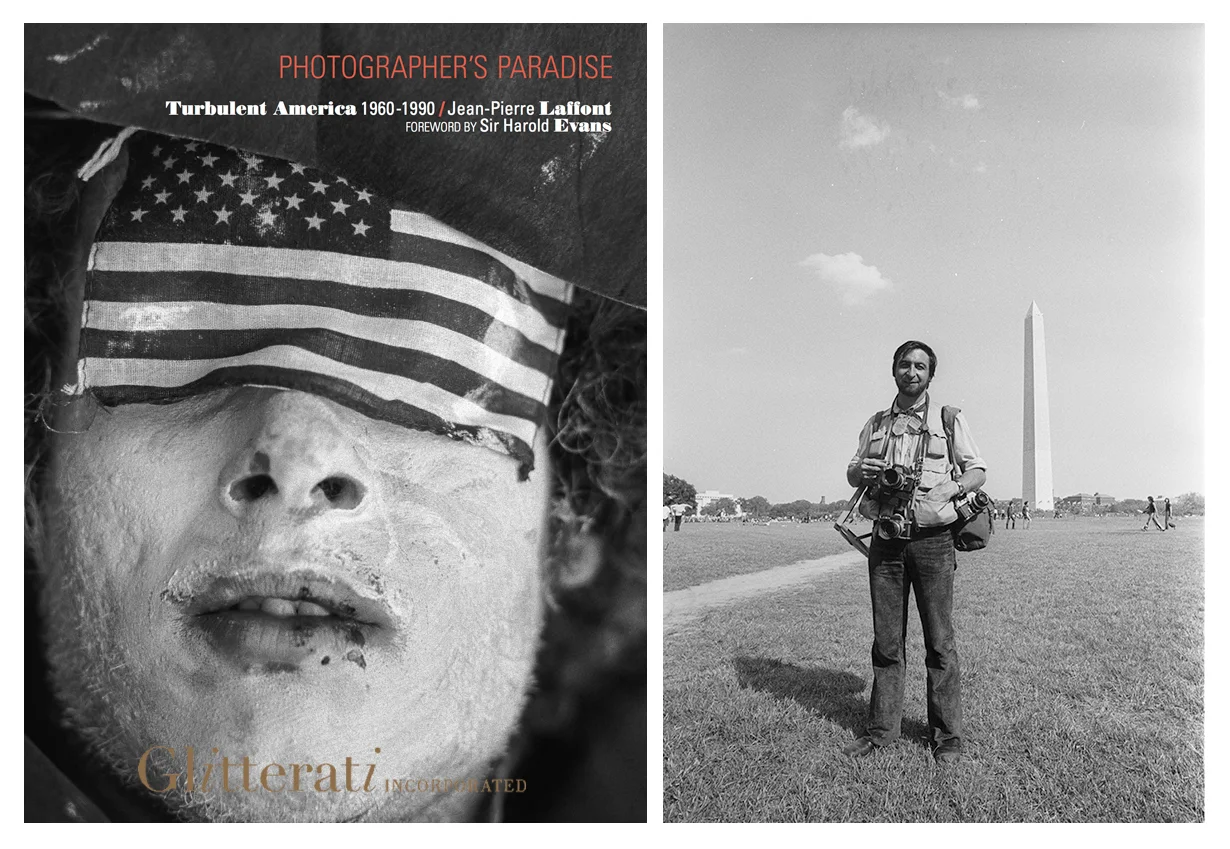
Book & Lecture Review: Photographer's Paradise: Turbulent America 1960-1990
“When I arrived in New York, it was glorious and beautiful, and it was also a disaster,” Jean-Pierre Laffont reflected, “First of all, there was no garbage disposal, and the streets looked like this,” pointing to brownstones littered with trash, “I immediately started to photograph.”
On the 12th of November, Jean-Pierre Laffont, as part of the lecture series held by the International Center of Photography, had an evening in conversation with Michele McNally, the Assistant Managing Editor ofThe New York Times, about his latest photo book, Photographer’s Paradise: Turbulent America 1960-1990, published by Glitterati Inc.
Starting at 7pm, the talk lasted an hour and a half, with Alison Morley, the chairperson for the Documentary Photography and Photojournalism Program, and Ms McNally reminiscing about encounters with Jean-Pierre, and his work.
From the moment the images of 20th century America appeared on the screen, the audience was hooked. Wide, glittering eyes gazed pensively at the astonishing images from a not-so distant past. From overdoses in Times Square, to B52 Bombers being loaded for Vietnam, Jean-Pierre traversed American history, through the images from Photographer’s Paradise whilst recalling the memories behind the photograph.
In 1967, Jean-Pierre shot his first reportage on the transgender community in New York. “It was my first summer in New York,” Jean-Pierre recalled, “I was coming out of the studio of Peter Basch and Phillippe Halsman… and two guys called me on the street (between 55th Street and Broadway). They asked if I was a photographer, and I said yes, and they asked if I could take pictures of them.”
Laffont not only documented subcultures, he also photographed technological milestones, such as the last day of the AT&T operator and Apollo XI, and different boycotts, like the postal service strike which resulted in President Nixon sending in the National Guard to sort through the mail.
Another historic event he captured was the departure of President Nixon from the White House. “For 6 years I was accredited at the White House… When you are White House accredited you must follow the president at all times. At the time Gerald Ford was getting ready to be sworn in, so I had the choice, either to go and photograph Gerry being sworn in, or to follow Nixon up to the last point,” Jean-Pierre said as he flicked the slide of Nixon waving goodbye from the helicopter. “There were very few photographer’s with me at that time… You can see the staff and chefs, many were crying. Annie Leibovitz and I photographed the moment where Nixon said goodbye.”
Photographer’s Paradise is quite a substantial photo book, and in this current age, publishing a photo book, regardless of size, has its challenges. Overproduction or over publishing, changing distribution channels and an ever-declining readership base, can weigh heavily on the minds of publishers and authors alike. Instead of focusing on this, one must look to the immortality of the photo book.
In Photographer’s Paradise, Jean-Pierre explores this immortality by showcasing the history of the formative years of modern America. In 392 pages, Laffont captures the misfits, impoverished and the defiant. He hones in on the explosion of the sexual revolution, civil rights movement and the consequence of an assault on the freedom of speech.
The echoes of America’s history can still be heard today, but as nations continue to prosper, and remove themselves from their tumultuous past, it is photo books, such as Jean-Pierre Laffont’s Photographer’s Paradise, which will stand as testimony’s to their history.
On the 26th of November 2014, this article was published in Musée Magazine.
Sami Shah on I,Migrant
“The only thing I remembered – for the longest time I would say that I didn’t remember a thing – was when I saw a man’s lungs on fire”, Sami Shah confessed last month. “This man’s chest were blown open, and his lungs were visible, and they were baking hot… like coals”.
In October, Shah, a Pakistani stand-up comedian and journalist, was invited by the Wheelers Centre to discuss his newly released book I, Migrant. He introduced the segment by talking about Benazir Bhutto, the eleventh Prime Minister of Pakistan for two non-consecutive terms.
At the time, Shah was working as a news producer when Benazir Bhutto returned after an eight-year, self-imposed exile to campaign for the 2008 elections. Millions of people lined the streets of Rawalpindi, hoping to catch a glimpse of the woman who once cited “You can kill a man, but not an idea”. Shah and his crew recorded Bhutto’s arrival at the airport; they were moving to another location when the news director called – there had been an explosion.
Two suicide bombers had attacked Bhutto’s convoy. The first occurred directly after she had retreated into her bulletproof truck, and then later the second suicide bomber attacked, killing approximately 170 civilians. When Shah entered the area, death and destruction coated the street; blackened bodies, separated limbs and dirty rags – chaos ensued.
He told the Wheeler Centre that this event was a pivotal moment in hislife, because five days after the attempted assassination of Bhutto, Shah was scheduled to perform a comedy skit. “There is a suicide bomber every day and people being held up,” Shah said, “People might think that I was being callous, but I didn’t care. I was not giving up on my comedic act … They [the audience], and I, needed a release”.
For many Australians, life in Pakistan, especially Karachi, is unfathomable.
“Everyone in Karachi gets held up, it’s almost a right to manhood,” explained Shah, “you have to get held up at gun point, otherwise, it is because you are the one holding the gun”.
The talk was hosted by ABC journalist Rafael Epstein and as it progressed Shah weaved a chronicle of his life, similar to what was written in his two hundred and eighty-two page book.
Through the evening he traversed through his life as Pakistan’s first Stand-Up Comedian, the escalating isolation he felt after being labelled a Liberal Fascist, and the melting pot of emotions he felt when he and his family moved to Western Australia.
“Being called Liberal Fascist is a Pakistani thing,” Sami explained, “I started to write a column in a local newspaper. I am considerably leftist, and this makes you a Liberal Fascist… It is someone who wants the world to be very liberal in its outlook and you want everyone to be liberal, so you must be a Fascist. Unfortunately when you begin to be called that, you also start to receive death threats”.
When his daughter Anya was born, he and his wife moved to Australia. They currently live in regional Western Australia, where Shah works as a freelance journalist.
In his book, I, Migrant, Shah uses satire and black humour to describe strikingly violent and tumultuous events. However, it is through this same humour that the reader captures a glimpse of a completely contradictory feeling, that of hope.
At the end of the talk, Shah reflected on the solitude of his new home and the lingering stigmas attached to skin colour. “There are some aspects of Australia that infuriate me and others that just make me uncomfortable, ” wrote Sami, “but at least my wife and daughter are safe here, and that’s all that matters”.
On the 11th of November 2014, this review was published on Peril Magazine's blog